|
August 23, 2025 - 29 Av 5785
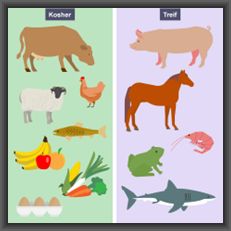
Dear Friends, The High Holidays are less than a month away and we are pleased to announce that the services will take place here at the synagogue. We look forward to having you join us for an uplifting, meaningful, and Hamish holiday season in the comfort of our beautiful sanctuary. Please remember to send in your reservation forms, so we know you are coming. If you have any friends, neighbors, or relatives who aren’t yet sure where to attend services, please share our information and encourage them to join us. One of the most exciting and interesting parts of studying Torah is in learning the origins of certain practices and customs. While some of the Torah's laws and precepts strike us in 2025 as being outdated, it is still nothing short of miraculous, both that so many of our traditions were instituted more than 3,000 years ago, and the fact that so many of them are still with us today. This week's portion, Parashat Re'eh, gives us the original instructions regarding the criteria of animals of all varieties to be eaten by the Israelites. Kosher fish must have fins and scales. Kosher birds must not be predatory. Kosher four-legged animals must have split-toed hooves and chew their cud. Why? I'll tell you: I don't know. Sure, there are many interpretations and Midrashim that hypothesize the underlying principles of what to eat and what not to eat. Many of these focus on hygiene and the supposedly healthier properties of the kosher animals, pointing to the pig and shellfish as examples of "dirty" animals from which our Torah protects us. Some interpretations center around spiritual purity, aside from or in addition to physical purity, that we will somehow attain in keeping Kashrut.
The truth is that the text doesn't tell us why. At least nothing beyond what is essentially God asserting: "Because I said so." The rules regarding kosher animals, like so many precepts from the Torah, were intended to separate us from the nations around us, to be purposefully different - and often completely contradictory - to help the Israelite people continue to develop their unique collective identity. If the neighboring nations revere swine, the Israelites will denigrate it. If those around us mark periods of mourning by cutting their skin, we do not. If child sacrifice was accepted in parts of the world in the Ancient Near East, we tell the story of the Binding of Isaac to say to our people: "They may do that. But we do not." I have tremendous respect for those who keep Kashrut today. I love and appreciate the different reasons folks keep a kosher home. For some, it is a way to maintain a connection to their parents and the homes they grew up in. For some it is about creating a home where almost anyone can feel comfortable eating without fear of breaking personal practices. For many, the laws, which don't have much or any reasoning given, are precisely all the more mysteriously holy than more straightforward Mitzvot. I applaud all of these perspectives. Personally, what resonates with me from this section of dietary restrictions is mindfulness. I believe God wants us, in our divinely-touched humanity, to be entirely separate from the other animals of creation. While other creatures seek food, tear immediately into it, and devour it within seconds, the laws of Kashrut put forth in Re'eh point us towards discernment and understanding. We are commanded to offer a blessing for what we are about to eat, forcing us to think for at least a moment about the food in front of us. What are we hoping to eat? What are we putting into the bodies God blessed us with and how will it impact our health? Perhaps most importantly, how can we show gratitude and appreciation for having something to eat, most especially in a world where hundreds of millions of people don't know where their next meal is coming from? If we are what we eat, which I believe is true, then we ought to be as deliberate and intentional as possible in contemplating what we put into our bodies. If we only have this one life to live, and only this one body in which to live it, we should be deeply mindful of what we put into it. And then, perhaps, as the Torah suggests, by engaging in this mindful living, we will live a long, happy, and healthy life in the world God gave to us. May it be so! Shabbat Shalom, Rabbi Joshua Strom
|