|
December 5, 2025 - `15 Kislev 5786
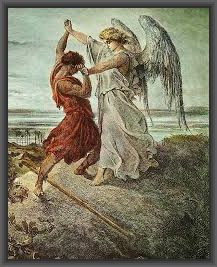
Dear Friends, Tomorrow evening, December 6th, at 5PM, Beryl & Harold Steinbach are opening their home to us for Havdalah. Everyone is welcome to attend, but we are trying to attract new members and supporters, so please be sure to bring a friend who might like to get to know us. As I have long said, and I’m fairly certain I did again this year, Parashat Lech L'cha, when God calls upon Abram, is the beginning of the story of the Jewish people. The creation of the world, the first human beings, and the flooding of the earth are the prologue, describing how we all got here before diving into our people's unique storyline. But maybe I'm wrong. Maybe the trials and tribulations of Abraham, Sarah, Isaac, and Rebekah - with their fertility and family struggles, with marital and sibling rivalries abounding - maybe those are more introductory than I had given them credit for. Maybe they're setting the stage for this week's Parasha, Vayishlach, to be where the story of the Jewish people really gets going. It's been twenty years since Jacob committed identity theft with the help of his mother, posing as his older brother Esau in order to receive their father Isaac's innermost blessing. Twenty years since the moment Esau said to himself, "Let but the mourning period of my father come, and I will kill my brother Jacob." Twenty years later, having both become great leaders of tribes and families, in fulfillment of the prophecy given to Rebekah when her sons were in utero, we find the twins on a collision course to see each other for the first time. Jacob is, understandably, afraid. He does not know if the time elapsed has softened his brother, or if the years have hardened his quest for revenge. He divides his camp into two groups, lest one be attacked. He offers a strikingly honest prayer to God in his moment of doubt and anxiety. He sends gifts to appease Esau in order to be seen favorably towards Jacob. What he does know, from reports, is that Esau is on his way to see him, with a retinue of 400 men. And that, shall we say, is not good. Lying down to sleep that night alone, knowing their confrontation awaited them the next day, the Torah tells us that "a man wrestled with him until the break of dawn." At dawn, this mysterious figure, assumed to be an angel by most within our tradition, demands that Jacob let him go. In language that calls to mind the famous identity theft mentioned earlier, and particularly Esau's anguished cries, Jacob replies: "I will not let you go, unless you bless me." The figure asks his name, and he replies, "Jacob." 'He said, "Your name shall no longer be Jacob, Israel, for you have striven with beings divine and human, and you have prevailed."' This is the name of our people. Yes, we are the children of Abraham, but that term applies to three world religions of Judaism, Christianity, and Islam, and is reflected in, among other things, modern-day diplomatic efforts like the Abraham Accords. But we are B'nai Yisrael, the Children of Israel. Why? Because Yisrael lies at the very essence of what it means to be human, and most especially what it means to be Jewish. To be Jewish is to embrace the struggle between the particularism of a faith and heritage of which we are, and should be, exceptionally proud, with the universalism of sharing the world with the rest of humanity. It is the struggle between the groundedness and sanctity of tradition as a foundation on the one hand, and the necessity of continued adaptation and evolution, as history rolls on, on the other. It is the struggle between our practices and our spirituality, between the needs of the individual and those of the collective, between the world as it is and the world as it should be. As some of us like to say, sometimes seriously and sometimes self-mocking, "The struggle is real." And I believe, with all of my heart, that this is why we are still here today. Because the struggle is real, and it never ends. I pray that it never will. Shabbat Shalom Rabbi Joshua Strom
|